Oswego, NY, 1908 – 1911
by Paul A. Lear
`Grand Old Fort but alas: Manned by “Colored Troops” for which as you know I have no use.’
Fort Ontario State Historic Site in Oswego, NY served the strategic interests of Great Britain and the United States as an army post from 1755 to 1946, and New York State from 1946 to 1949 as a postwar veterans housing emergency apartment project [www.nysparks.com] [www.fortontario.com]. Soon after a racially charged incident in Brownsville, Texas ignited a national controversy for President Theodore Roosevelt, a regular army infantry battalion of three hundred African-American soldiers arrived at Fort Ontario. They were the first of the legendary Buffalo Soldiers to be posted east of the Mississippi River, and thrust Fort Ontario into the spotlight of the growing civil rights movement. According to lore, Native Americans used the term Buffalo Soldiers to describe black soldiers whose dark curly hair resembled buffalo mane, or because the soldiers fought like the fierce Great Plains buffalo. What occurred over the next nearly four years at the historic fortification became a significant chapter in the long American odyssey from racially segregated military units to the end of the practice in Korea in 1951.

In this July 1908 colorized postcard photograph officers and men of the 2nd Battalion, 24th U.S. Infantry appear during full-dress inspection or Dress Parade and Retreat on the Parade Ground at Fort Ontario. White officers are on horseback in front and on foot in rear or at the sides of black soldiers on foot in double ranks. All wear white gloves. Buildings from left to right are the Post Exchange-Gymnasium (still standing), two enlisted men’s barracks, barn, stable, and corner of the hospital. They were constructed in 1904-05 when the fort was modernized and converted from an obsolete 19th century company post to a modern infantry battalion training post. Whether garrisoned by white or black troops, the army was a segregated society, and the wide parade ground was both a symbolic and actual gulf between enlisted men living communally in barracks, and commissioned officers with their families in comparably commodious quarters on Officers Row.
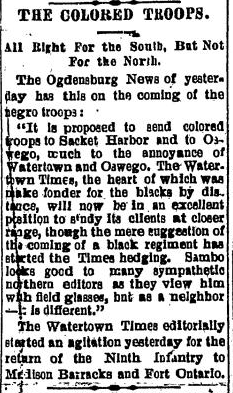
During the early 20th century the situation for black soldiers in the U.S. Army was deteriorating rapidly. The Buffalo soldiers were no longer needed to quell Native American uprisings, the Spanish-American War had ended quickly, the Boxer Rebellion in China and the Philippine-American War were over as well. As army regulars returned to garrison life in the United States the proponents of segregation and domination were pursuing their racist goals more fervently than ever. The Ku Klux Klan was approaching its pinnacle of strength and numbers, racist members of Congress tried to purge the four Buffalo Soldier regiments from the regular army, and in some states black National Guard regiments were eliminated and others relegated to labor duties.
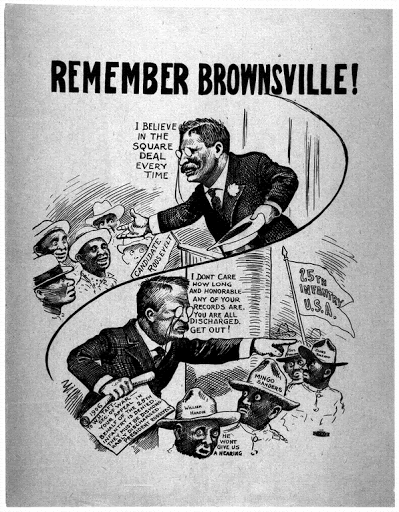
Mindful of the professional pride, discipline, and assertiveness of African-American soldiers, and perhaps to their access to weapons, white civilians in the mid-west and south vehemently objected to them being posted near their communities. Arriving at Fort Brown, Brownsville, Texas from duty in the Philippines and Fort Niobara, Nebraska, the black soldiers of the 1st Battalion, 25th U.S. Infantry Regiment encountered racial discrimination, physical abuse, and threats from businesses, civilians, and customs collectors. After being accused of going on a midnight shooting spree in Brownsville on August 12-13, 1906 that left a civilian bartender dead, and a police officer wounded, President Theodore Roosevelt ordered the largest dismissal of troops “without honor” in army history despite a grand jury issuing no individual indictments. [https://www.tshaonline.org/handbook/entries/brownsville-raid-of-1906].
Roosevelt’s action shocked his black civilian constituency and the Constitution League, a national civil-rights organization, who along with many whites decried his draconian measure denying due process to the 167 men dismissed from service, including six medal of honor recipients, and some nearing retirement with pensions. As a result of the Brownsville Raid the War Department announced that when the 24th Infantry left the Philippines in 1908 it was being assigned to Fort Ontario in Oswego, and Madison Barracks in Sackets Harbor, NY. Earlier, in rejecting a Texas senator’s demand to reassign the black troops before they arrived at Fort Brown, Secretary of War William H. Taft (later President) wrote him that “sometimes communities which objected to the coming of colored soldiers, have, on account of their good behavior, entirely changed their view and commended them to the War Department.” He added: “The fact is that a certain amount of race prejudice between white and black seems to have become almost universal throughout the country, and no matter where colored troops are sent there are always some who make objections to their coming.”


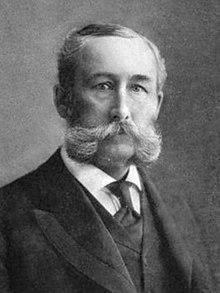
Oswego County, NY was a hotbed of the abolitionist movement and active in the Underground Railroad before the Civil War and during the war it sent thousands of men to fight with the Union Army. Afterwards, Oswego’s representatives in Congress were strong supporters of Reconstruction and civil rights for former slaves. However, Taft’s observation that racial prejudice prevailed throughout the nation sadly rang true even in abolitionist Oswego. When news of the 24th coming reached the north country it prompted hysterical fears of disorder and lawlessness.
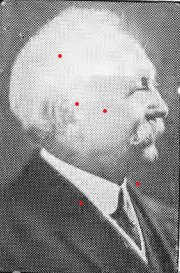
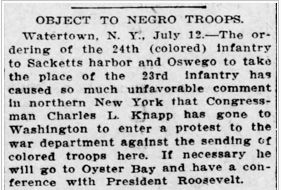
Some residents sent petitions to the War Department and appealed to their Congressman, Charles L. Knapp, and State Committee Representative John T. Mott, both close friends of Roosevelt. Knapp didn’t file an official protest but instead attempted to have the white 9th U.S. Infantry substituted for the black 24th. He claimed motivation from the 9th having previously been garrisoned at Fort Ontario and Madison Barracks and containing many locally recruited soldiers whose families wanted them near home.
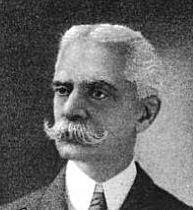
Knapp and Mott and citizens objecting to the black soldiers drew fiery criticism from the national press and civil rights advocates, bitter resentment from Assistant Secretary of War Robert Shaw Oliver, and southern racists who reveled in the hypocrisy of the north. Oliver, a native New Yorker and abolitionist, angrily declared that the “War Department knows no color line…” and sent the 24th to Oswego and Sackets Harbor as planned.
By the time the black troops arrived at Oswego in late March 1908 community leaders and the press had taken a wait and see attitude. Little notice of them appeared in local newspapers, but the Daily Palladium reported that some restauranteurs discussed raising the price of food and drink to keep the black troops out; others said that they would maintain regular prices provided the troops conducted themselves decently. For their part the 24th reacted to initial hostility with quiet professional pride and dignity; they quickly became active and beneficial members of the Oswego community. First to benefit were the tailor shops who received orders to replace clothing lost when the 24th’s stored baggage was destroyed in the San Francisco earthquake. The men had arrived with literally all the tropical climate clothing they owned on their backs or in knapsacks. The 24th spent their pay and participated in community activities, ceremonies, parades, sporting events, veterans’ funerals, etc, and the post orchestra performed regularly in the city.


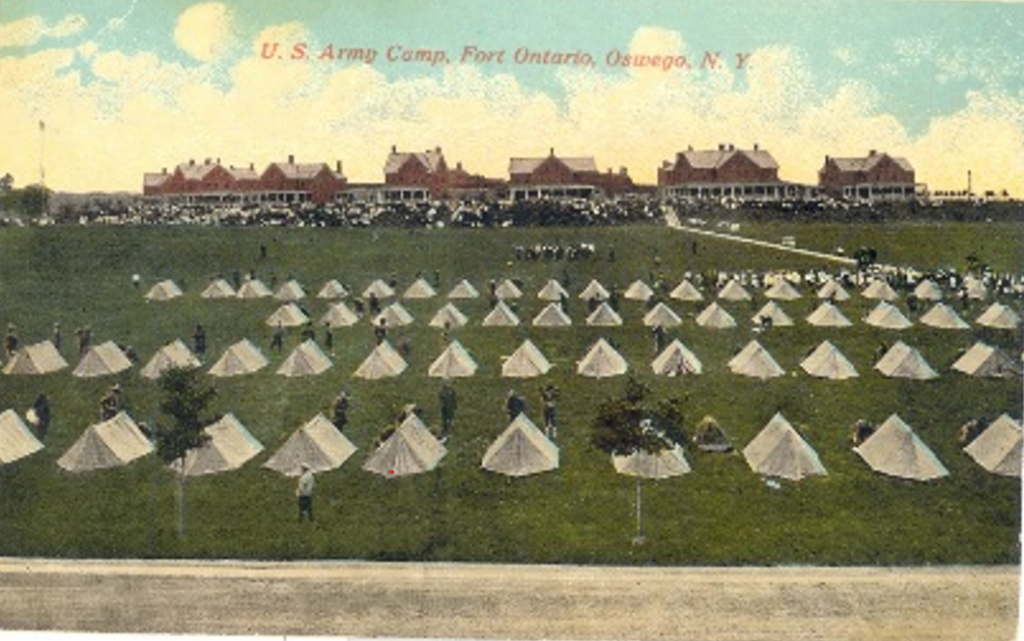
In this July 1908 colorized postcard photograph the 2nd Battalion, 24th U.S. Infantry is being inspected on Fort Ontario’s expansive parade ground. White commissioned officers are inspecting the field equipment of black enlisted men displayed on the ground in front of their tents. The post orchestra performs during inspection and may be the group located behind the tents near center. Officers families and their guests sit on chairs or on the ground at right behind the tents. Spectators line the bank in front of Officers Row. The walls of the old stone fort are visible in gaps between red brick officer’s quarters. At far left in the white clouds and blue sky the flag is fluttering on the pole in the wind off Lake Ontario. Unseen at its base is a cannon which wakes the garrison and city residents in the morning, and send them to bed in the evening, accompanied by a bugler blowing reveille and taps.
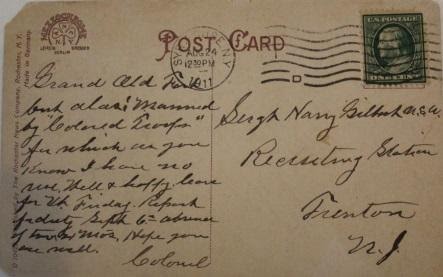
This penny postcard is an iconic artifact in the collection of Fort Ontario State Historic Site. It coldly documents racism in the early 20th century U.S. Army officer corps. Postmarked Syracuse, NY, August 24, 1911, an unidentified colonel addressed it to a sergeant at the recruiting station in Trenton, NJ. He wrote: `Grand Old Fort but alas: Manned by “Colored Troops” for which as you know I have no use. Well & happy, leave for VT. Friday. Report for duty Sept. 6th. Absence of two ? mos. Hope you are well. Colonel.’ The “Colonel” was likely on leave visiting white officer friends at Fort Ontario and traveling to see others at Fort Ethan Allan, Vermont, garrisoned by black troopers of the 10th U.S. Cavalry Regiment a year after the 24th arrived at Oswego. Many commissioned officers avoided assignment to black regiments, transferred out at the first opportunity, and refused promotions to one; some urged their elimination or relegation to menial manual service. Many in the army believed that only southern whites knew how to command black troops, and discouraged, harassed, and sought to drive out the few blacks who sought to become or became commissioned officers. On the other hand, the Buffalo Soldier Regiments often attracted white commissioned officers without racist beliefs who were proud to serve in them.
The Black Belt – Oswego Daily Palladium, December 23, 1911
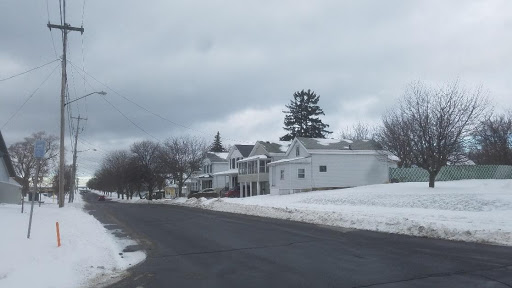
“Oswego is fast losing the population which, for the past two years and a half, lent a touch of color to the throngs on the street, and before another month has passed the colored soldiers and their friends who remained after the 24th Infantry from Fort Ontario will have gone. Hardly a day goes by but one or more leaves the city for more congenial climes and people and, with them the “Black Belt” goes out of existence after two years of flourishing prosperity. The ”Black Belt”, as it was named by the police, was that portion of the Second War near the Post which, by common consent, appeared to be set apart for houses where dwelt colored people, the followers of the troops houses which were not in very good repair were taken over at high rental in that vicinity and for a time the place too on new life. The establishment of a settlement there made many of the older inhabitants move into other wards. They were not much trouble to the police, the inhabitants of the “Belt,” but whenever there was trouble in the city, it was generally in that locality. It was the scene of one murder, when Private Benny Lee murdered his sweetheart, and of numerous other stabbing affrays, many of which were never investigated by the police. It must be said, however, that the inmates kept well to themselves and resented the intrusions of white people looking for trouble, and there were more than one row which had the neighbors talking for weeks. They are leaving now, for the last of this month will see the leases on many of the houses expire. It has been estimated that when the colored battalion was at Fort Ontario there were over 100 colored women in this city and they were certainly gorgeous dressers. Violet bonnets and flaming dresses are in the minority now and the merchants in retail business miss them, for both soldiers and the others were good spenders and bout only the best.” The black infantrymen of the 24th who garrisoned Fort Ontario from March 1908 to November 1911 were not saints and they sometimes committed petty and more serious crimes. Most involved disputes between soldiers, not civilians, and when they occurred were interpreted for what they were, isolated incidents. When a critic in the Army and Navy Journal cited a rash of incidents between black soldiers at Fort Ontario as cause for elimination of the Buffalo Soldier regiments, Oswego’s police chief defended them and said they were less trouble than the white troops they replaced. Initial hysteria against the 24th disappeared as white citizens fears towards the black soldiers went unrealized. The soldiers conducted themselves as gentlemen and were courteous towards civilians, but unlike white troops they were forced to prove themselves beyond any doubt before being trusted. As Secretary of War Taft observed before the Brownsville Affair in 1906, once some communities gave black troops a chance they praised and commended them to the War Department. Oswego became one of those communities. A year after the 24th arrived at Oswego, the 10th U.S. Cavalry Regiment was assigned to Fort Ethan Allan, Vermont, and history and hypocrisy repeated itself. https://vermonthistory.org/journal/73/07_Work.pdf


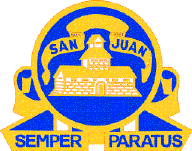
The distinctive unit insignia of the 24th Infantry Regiment was approved on 12 January 1923, with imagery celebrating one of the regiment’s greatest combat achievements up to that point in its history: the capture of the blockhouse at Santiago during the Battle of San Juan Hill in the War with Spain. Blue in the insignia denotes the organization as Infantry, while the Latin motto “SEMPER PARATUS” translates to “Always Ready.”
TO THE TWENTY-FOURTH
– L. Albert Scipio II –
24th, you sprang from the ashes of the Civil War,
A real opportunity came at last;
But like an unwanted child, you were not encouraged to go very far,
Notwithstanding, you remained steadfast.
I recall your birth in Texas, that day in 1869,
You were an experiment, something to be tried for awhile –
A permanent black Army unit was not in mind
But you accepted the challenge with a smile.
Though not well-known, you served with honor in the West
But you had to wait for Cuba to gain attention;
Your victories compare with the very best,
Even then you received merely limited mention.
Throughout your life, there were many San Juan Hills to ascend,
You took them in stride with your head held erect.
That the problems were special, we need not pretend –
Nevertheless history’s treatment is not entirely correct.
Those who know the truth of your past,
See your men, not boys, standing straight and tall,
Reaching from the Western Plains to Korea, the place of last
Lined up to answer your country’s call.
Not many of us are left who knew your embrace,
That makes us very special indeed;
With your colors cased and no one to take your place
No longer will you serve America’s need.